“It’s not that I’m so smart, it’s just that I stay with problems longer.” — Albert Einstein
In a world increasingly driven by inherited wisdom and conventional practices, the ability to think from first principles has never been more crucial. As a security researcher and advocate for evidence-based reasoning, I’ve discovered that our most transformative insights come not from building upon existing assumptions, but from questioning everything and rebuilding from fundamental truths.
What Is First Principles Thinking?
First principles thinking is the art of breaking down complex problems into their most basic, proven elements and then reassembling them from the ground up. It’s about distinguishing between what we think we know and what we can prove through evidence and logical reasoning.
The Power of Starting from Zero
Quick Practice
Take a moment to apply first principles thinking to a daily activity:
- Choose a common task you perform (e.g., your morning routine)
- List all your assumptions about how it must be done
- Question each assumption: “Why do I believe this is necessary?”
- Identify the fundamental goal of the task
- Design a new approach based only on what’s truly essential
Consider This: What “obvious” solutions in your field might be based on outdated assumptions?
The Power of Fundamental Truth
When we strip away assumptions, we’re left with basic truths that can be proven through:
- Direct Observation: Empirical evidence gathered through careful measurement and documentation
- Mathematical Proof: Rigorous logical demonstrations that establish unshakeable foundations
- Empirical Evidence: Reproducible results from controlled experiments and systematic observation
- Logical Reasoning: Step-by-step deduction that reveals necessary truths
Practical Example: Overhauling Your Morning Routine
Let’s walk through how to apply first principles thinking to redesign a common task: your morning routine.
Traditional Morning Routine Assumptions
- Wake up to an alarm clock.
- Check phone for messages and emails immediately.
- Drink coffee to wake up.
- Watch or read the news.
- Prepare and eat breakfast.
- Commute to work by car.
Applying the First Principles Method
1. Question Everything Systematically
- Why do I wake up to an alarm clock?
- Assumption: I need an alarm to wake up on time.
- Evidence: Waking up abruptly often leaves me feeling groggy.
- Why do I check my phone first thing?
- Assumption: I need to stay updated.
- Evidence: Early exposure to emails increases stress levels.
- Why do I drink coffee to wake up?
- Assumption: Caffeine boosts my energy.
- Evidence: Reliance on coffee can lead to energy crashes later.
- Why do I commute by car?
- Assumption: It’s the fastest way to get to work.
- Evidence: Traffic congestion often delays me.
2. Break Down Complex Systems
- Fundamental Goals of Morning Routine:
- Wake up feeling refreshed.
- Prepare mentally and physically for the day.
- Arrive at work on time and stress-free.
3. Build Up from Fundamentals
-
Proven Truths:
- Quality sleep improves morning alertness.
- Natural light exposure regulates circadian rhythms.
- Physical activity boosts energy levels.
- Mindfulness reduces stress.
- A healthy breakfast fuels the body.
-
Reconstructing the Routine:
- Optimize Sleep:
- Go to bed earlier to ensure 7–8 hours of sleep.
- Use a sleep tracker to find the optimal wake-up time.
- Natural Wake-Up:
- Use a light-based alarm clock that simulates sunrise.
- Morning Hydration and Stretching:
- Drink a glass of water upon waking.
- Spend 10 minutes doing yoga or stretching exercises.
- Mindfulness Practice:
- Meditate for 5–10 minutes to start the day with a clear mind.
- Nutritious Breakfast:
- Prepare a meal rich in proteins and whole grains.
- Digital Detox:
- Avoid checking phone and emails until after arriving at work.
- Active Commute:
- Bike or walk part of the way to work to incorporate physical activity.
- Optimize Sleep:
Improved Results
- Enhanced Energy Levels: Better sleep and morning exercise increase alertness.
- Reduced Stress: Mindfulness and avoiding early digital distractions promote calmness.
- Better Health: A nutritious breakfast and physical activity contribute to overall well-being.
- Increased Productivity: Arriving at work refreshed leads to better focus and efficiency.
Why This Matters Now
In our rapidly evolving technological landscape, inherited solutions and “best practices” often become outdated before we even question them. First principles thinking offers:
- Liberation from Cognitive Biases: Break free from inherited assumptions and conventional wisdom
- Innovation Potential: Create truly novel solutions by rebuilding from fundamentals
- Deeper Understanding: Know why solutions work, not just how they operate
- Intellectual Independence: Develop your own reasoned perspectives based on verified truths
The First Principles Method
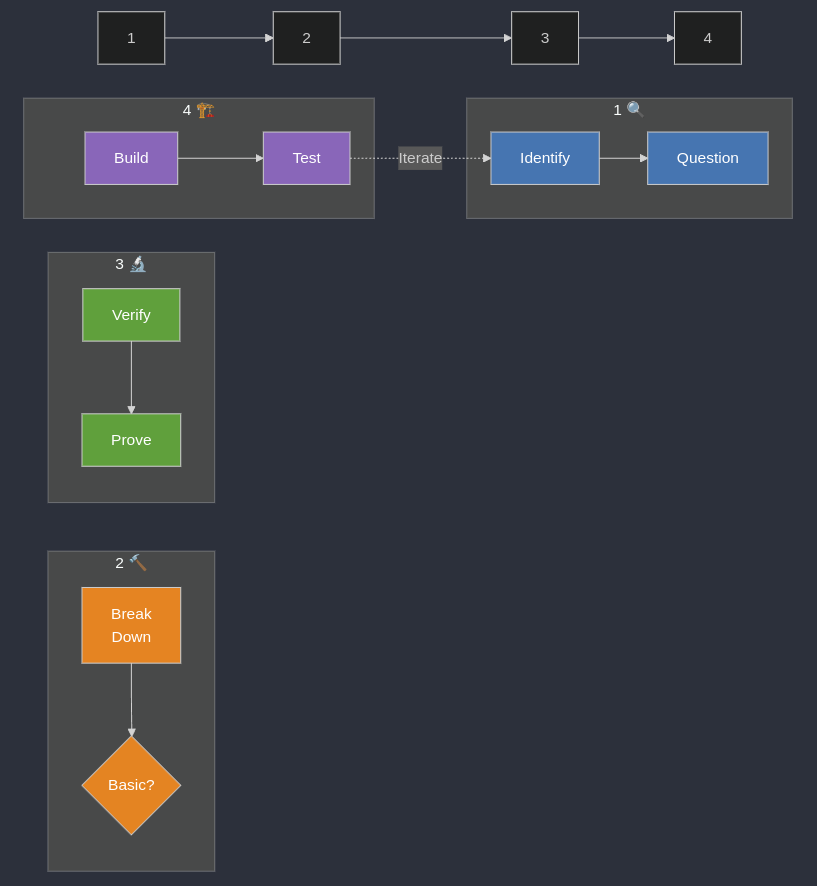
1. Question Everything Systematically
Analysis Framework:
- What am I assuming about this situation?
- What concrete evidence supports each assumption?
- What observable facts might contradict these assumptions?
- What’s the simplest explanation that fits all the evidence?
- How can I test these conclusions empirically?
2. Break Down Complex Systems
Example: Analyzing System Security
| Traditional Approach | First Principles Approach |
|---|---|
| Follow industry best practices | What specific assets require protection? |
| Implement standard security layers | What are the actual threats to these assets? |
| Apply common frameworks | What security methods can we prove effective? |
| Use established tools | What minimal system achieves our security goals? |
3. Build Up from Fundamentals
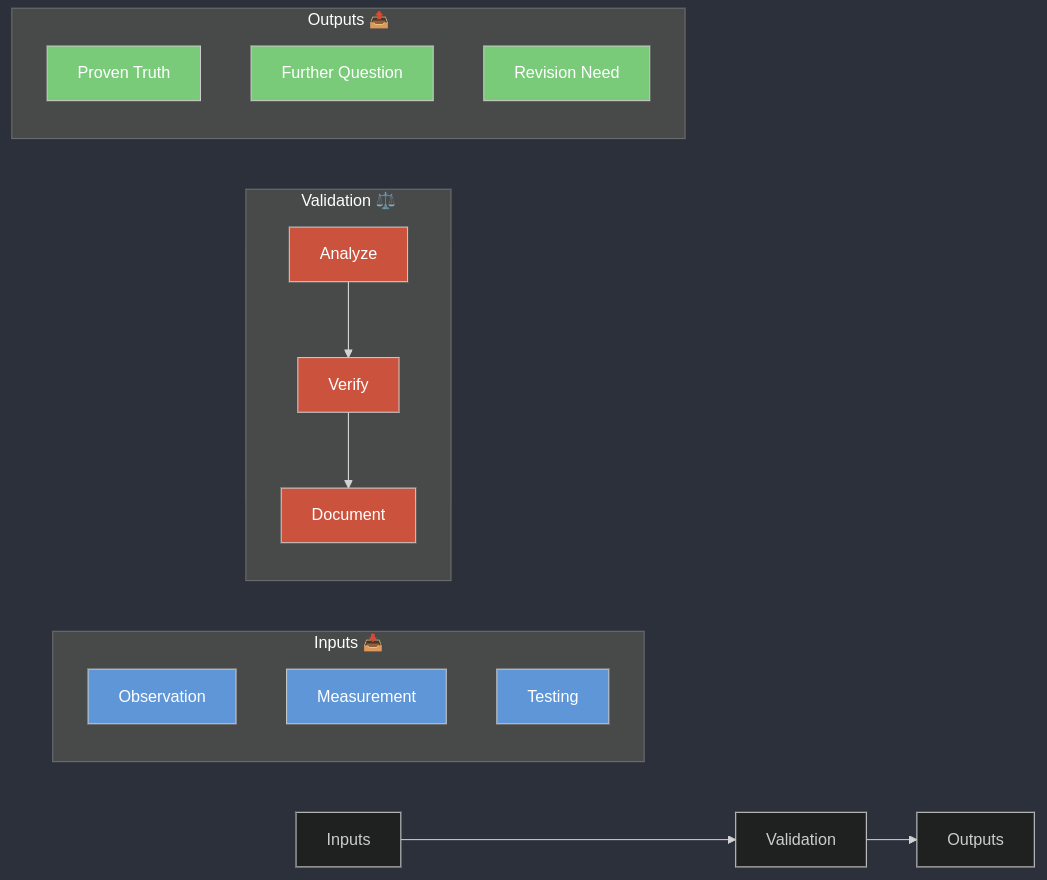
- Start with Proven Truths: Base your reasoning on established facts and mathematical certainties
- Add Only What You Can Verify: Incorporate new elements only when supported by evidence
- Test Each Addition: Validate new components through rigorous experimentation
- Document Your Reasoning: Maintain a clear record of your logical process
Real-World Applications
1. Cybersecurity Revolution
Traditional Thinking: “Add more layers of security.”
First Principles Approach:
- What is security fundamentally about? Protecting valuable assets from specific threats
- What makes a system trustworthy? Verifiable properties and proven resilience
- How can we prove security? Through formal verification and mathematical models
Result: Development of zero-trust architectures and provable security models that rely on continuous verification rather than perimeter defenses.
2. Privacy Engineering
Starting from Scratch:
- What is privacy essentially? Control over personal information flow and usage
- What data is truly necessary? The minimal set required for core functionality
- How can we verify privacy guarantees? Through cryptographic proofs and zero-knowledge protocols
Result: Creation of privacy-preserving systems that deliver functionality without compromising personal data.
3. Strategic Decision Making
Chess Strategy Parallel:
| Strategic Element | First Principles Application |
|---|---|
| Position Evaluation | What are the immutable facts of this position? |
| Move Selection | What can we logically deduce from the current state? |
| Game Planning | What strategies emerge from basic positional truths? |
Tools for First Principles Analysis
1. The Socratic Method
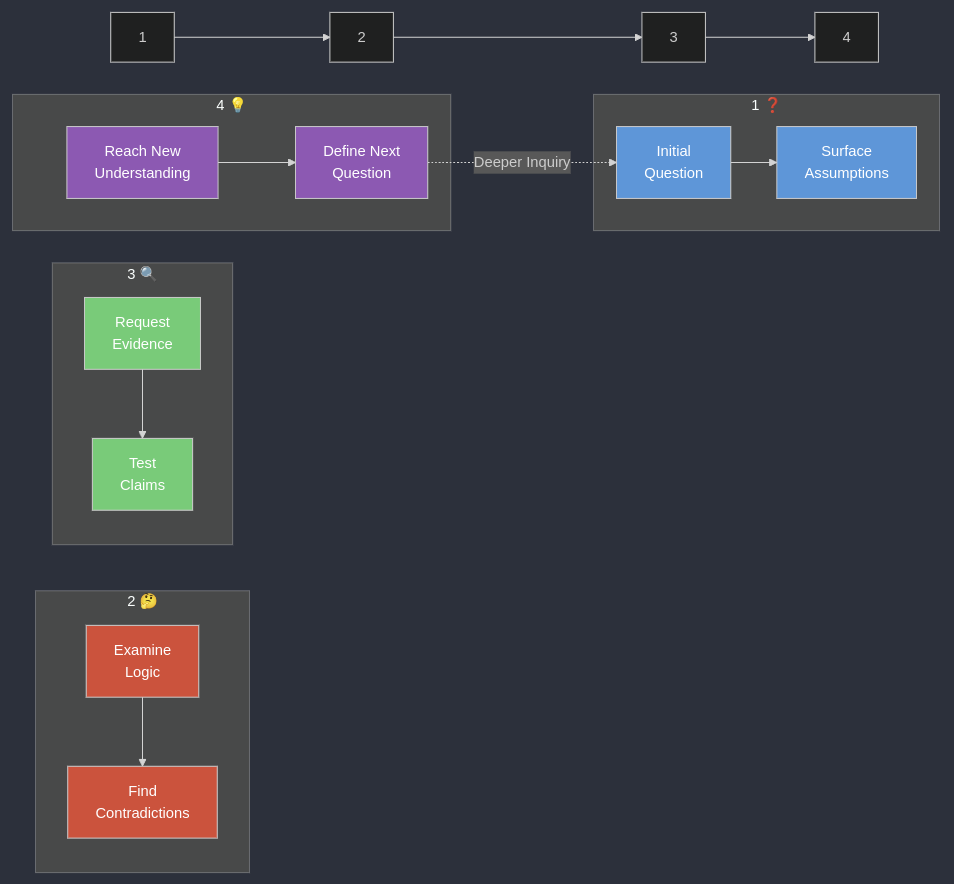
- Question Assumptions: Challenge every inherited belief
- Seek Evidence: Gather data that supports or refutes each position
- Follow Logical Consequences: Understand the full implications of your evidence
- Test Conclusions: Verify your reasoning through practical experiments
2. Decision Trees
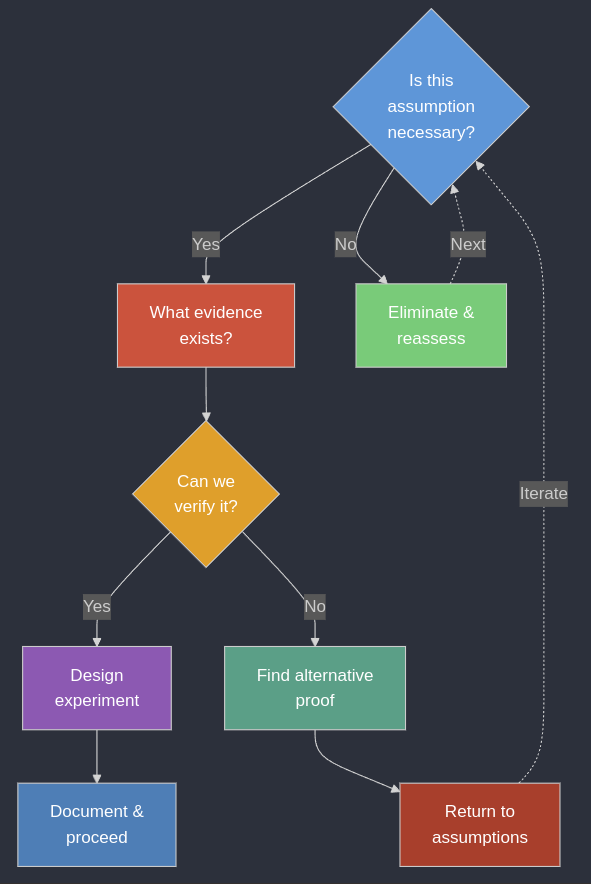
3. First Principles Matrix
| Assumption | Evidence | Counter-Evidence | Conclusion |
|---|---|---|---|
| Users prioritize speed | Performance metrics, user surveys | Feature requests, usage patterns | Balance speed with core functionality |
| More features add value | Initial user excitement | Usage complexity, maintenance costs | Focus on essential features |
| Security requires complexity | Attack prevention stats | Usability studies | Design simple, provable security |
Common Pitfalls and How to Avoid Them
1. Over-reduction
Problem: Breaking things down too far and losing practical utility Solution: Focus on the level of reduction that yields actionable insights
2. Analysis Paralysis
Problem: Getting stuck in the breakdown phase Solution: Set clear timeframes for analysis and decision-making
3. False Fundamentals
Problem: Mistaking assumptions for first principles Solution: Rigorously test each “fundamental” through observation and experiment
4. Scope Creep
Problem: Trying to apply the method to too many variables at once Solution: Start with smaller, well-defined problems and gradually expand scope
Practical Exercises
Daily Practice
- Identify One Assumption: Choose something you take for granted
- Break It Down: Identify its fundamental components
- Rebuild with Evidence: Reconstruct your understanding based on facts
- Document Insights: Journal your discovery process
Weekly Challenge
- Choose a Complex System: Select a workflow or technology you use regularly
- Map Its Components: Document each element’s purpose and relationships
- Question Necessity: Evaluate which components are truly essential
- Design Alternatives: Create improved solutions from first principles
Measuring Progress
Track your development through:
- Decision Quality: Document outcomes of first-principles-based decisions
- Innovation Metrics: Count novel solutions generated
- Understanding Depth: Assess ability to explain complex topics simply
- Implementation Success: Measure effectiveness of solutions
A Personal Note on Critical Thinking
Throughout my journey in security research and strategic thinking, I’ve learned that our most powerful tool is our ability to question assumptions and seek evidence. This approach has transformed not just my professional work but my entire worldview—leading to clearer thinking, better decisions, and more reliable solutions.
By embracing first principles thinking, I’ve tackled complex security challenges, designed more elegant systems, and contributed to our community’s understanding of effective problem-solving.
Conclusion: The Path Forward
First principles thinking isn’t just a methodology—it’s a commitment to intellectual honesty and rigorous analysis. In a world where accepted wisdom often goes unquestioned, the ability to think from fundamentals becomes our most valuable tool.
Remember: The goal isn’t merely to accumulate knowledge, but to develop the ability to derive truth from evidence and reason. Whether you’re securing systems, solving complex problems, or examining your own beliefs, this approach will serve you well.
Next Steps
- Start Your First Principles Journal: Document your questioning process
- Join a Discussion Community: Engage with fellow critical thinkers
- Practice Daily Assumption Questioning: Make it a consistent habit
- Share Your Insights: Contribute to collective knowledge growth
Thank you for engaging with this exploration of first principles thinking. I look forward to your insights and contributions to this ongoing conversation.
]]>