<?xml version="1.0" encoding="utf-8" standalone="yes"?>
<feed xmlns="http://www.w3.org/2005/Atom">
  <title>Digital Rights on Sooraj Sathyanarayanan</title>
  <link rel="alternate" href="https://profincognito.me/tags/digital-rights/" />
  <link rel="self" href="https://profincognito.me/tags/digital-rights/index.xml" />
  <subtitle>Recent content in Digital Rights on Sooraj Sathyanarayanan</subtitle>
  <id>https://profincognito.me/tags/digital-rights/</id>
  <generator uri="http://gohugo.io" version="0.147.8">Hugo</generator>
  <language>en-us</language>
  <updated>2026-05-25T14:44:10-07:00</updated>
  <author>
    <name>Sooraj Sathyanarayanan</name>
    
  </author>
  <rights>[CC BY-SA 4.0](https://creativecommons.org/licenses/by-sa/4.0/)</rights>
      <entry>
        <title>Reclaiming Our Digital Freedom: Why I Joined the Privacy Acceleration Movement</title>
        <link rel="alternate" href="https://profincognito.me/blog/privacy/privacc/" />
        <id>https://profincognito.me/blog/privacy/privacc/</id>
        <published>2026-03-04T00:00:00Z</published>
        <updated>2026-05-25T14:44:10-07:00</updated>
        <summary type="html">A personal journey into the Privacy Acceleration movement and why digital privacy matters more than ever in our interconnected world.</summary>
          <content type="html"><![CDATA[<p><img loading="lazy" src="/images/content/blog-privacy-privacc-4a7be1eb-29a4-468c-8d35-c4c09eedeb3c.jpg" alt="privacc-badge" />
</p>
<p>I added &ldquo;priv/acc&rdquo; to my social media bio. It wasn&rsquo;t just another cryptic internet acronym – it was a declaration of intent. The Privacy Acceleration movement has given voice to concerns I&rsquo;ve harbored about our digital lives, and today I want to share why this matters deeply to me – and should matter to you too.</p>
<h2 id="the-wake-up-call"><strong>The Wake-Up Call</strong></h2>
<p>My awakening wasn&rsquo;t sparked by a single dramatic event. It was a series of unsettling realizations that coalesced into a profound understanding of the precarious state of our privacy.</p>
<p>It started when I mentioned a specific product to a friend during a &lsquo;private&rsquo; conversation. Hours later, I was bombarded with ads for that very item on my social media feeds. A chill ran down my spine. <em>How much are they watching?</em></p>
<p>Digging deeper, I began reading the fine print in privacy policies—the ones we usually skim over or ignore entirely. I was shocked to discover just how much personal data I was unknowingly surrendering. Not just basic information, but details about my habits, preferences, and even my beliefs.</p>
<p>I learned that this data is used not just to sell products, but to influence decisions, target vulnerabilities, and, disturbingly, manipulate opinions. Our digital footprints aren&rsquo;t just harmless traces; they&rsquo;re intimate reflections of our lives—collected, analyzed, and sold without our true consent.</p>
<h2 id="the-gravity-of-the-situation"><strong>The Gravity of the Situation</strong></h2>
<p>We often hear about data breaches and privacy violations in abstract terms, but their effects are deeply personal and far-reaching.</p>
<p>Consider the recent revelations about spyware being used to monitor journalists and activists. This isn&rsquo;t science fiction; it&rsquo;s happening now. Such intrusions invade personal privacy and threaten safety, undermining free expression and democracy itself.</p>
<p>Surveillance doesn&rsquo;t just infringe on our privacy—it stifles creativity, breeds mistrust, and erodes the human spirit. When we know we&rsquo;re being watched, we hesitate. We self-censor. We avoid exploring ideas, asking questions, or expressing opinions that could be deemed controversial. This silent suppression limits our ability to learn, grow, and connect authentically.</p>
<p>Our personal data is used to manipulate our choices and influence our opportunities. It&rsquo;s not merely about targeted ads; it&rsquo;s about subtle nudges that steer our decisions without our conscious awareness. It&rsquo;s time we acknowledged that this isn&rsquo;t acceptable.</p>
<h2 id="why-privacy-matters-now-more-than-ever"><strong>Why Privacy Matters Now More Than Ever</strong></h2>
<p>Privacy isn&rsquo;t just about hiding information; it&rsquo;s about <strong>preserving our autonomy</strong>—the fundamental right to control how we present ourselves to the world, to explore ideas without fear of judgment or repercussion, and to communicate freely and openly.</p>
<p>The encroachment on our privacy isn&rsquo;t slowing down—it&rsquo;s accelerating. Technological advancements that hold the potential to empower us are often co-opted as tools of surveillance and control. Artificial intelligence, big data analytics (which involve analyzing vast amounts of data to find patterns), and always-connected technology become mechanisms for unprecedented intrusion into our personal lives.</p>
<p>But the same innovations can be harnessed to <strong>liberate</strong> us. Encryption (which secures our data), decentralized networks (which distribute control rather than centralize it), and privacy-enhancing technologies are not just technical tools—they&rsquo;re instruments of personal and collective freedom.</p>
<h2 id="the-privacy-acceleration-movement"><strong>The Privacy Acceleration Movement</strong></h2>
<p>The <a href="https://privacc.org">Privacy Acceleration movement</a> is a collective response to this urgent crisis. It&rsquo;s a coalition of technologists, activists, thinkers, and everyday individuals united by a shared conviction: that privacy is not optional but essential for personal freedom and a functioning democracy.</p>
<p>We recognize that the future of privacy cannot be delayed, debated, or dissected endlessly—it must be <strong>accelerated now</strong>. The pace of intrusion is relentless; our response must be swifter, more decisive, and more innovative.</p>
<p>This movement isn&rsquo;t about resisting technology; it&rsquo;s about redefining it. It&rsquo;s about ensuring that technological progress serves humanity&rsquo;s highest ideals rather than undermining them.</p>
<h2 id="a-vision-for-the-future"><strong>A Vision for the Future</strong></h2>
<p>Imagine a world where our personal data isn&rsquo;t a commodity, where our online interactions are free from manipulation, and where technology serves as a tool for empowerment rather than control. Picture a society where individuals can explore ideas, express themselves, and connect with others without fear of surveillance or coercion.</p>
<p>This isn&rsquo;t a utopian dream—it&rsquo;s a future we can <strong>build together</strong>. By embracing privacy as a core value, advocating for our rights, and supporting technologies that protect our autonomy, we&rsquo;re not just safeguarding ourselves; we&rsquo;re laying the groundwork for a more just and free society.</p>
<h2 id="an-invitation-to-stand-together"><strong>An Invitation to Stand Together</strong></h2>
<p>We stand at a pivotal moment in history. The choices we make today will shape the digital landscape for generations to come. Will we allow our freedoms to be quietly eroded, or will we take a stand to protect them?</p>
<p>As the <strong>Privacy Acceleration Manifesto</strong> declares:</p>
<p><strong>&ldquo;We will not wait for permission. We will not apologize for defending our right to exist unobserved. We are not products. We are not data points. We are free individuals.&rdquo;</strong></p>
<p>This is more than a statement—it&rsquo;s a call to action. A call to <strong>reclaim our digital freedom</strong>, to assert our rights, and to demand that technology serves us, not the other way around.</p>
<h2 id="join-the-movement"><strong>Join the Movement</strong></h2>
<p>Now is the time to act. To question. To challenge. To innovate.</p>
<p>By joining the Privacy Acceleration movement, you&rsquo;re not only taking a stand for your own rights but also contributing to a collective effort that transcends borders and cultures. Together, we can amplify our voices, influence policies, and drive the development of technologies that honor our autonomy.</p>
<p><strong>Privacy will not wait—and neither should we.</strong></p>
<p><strong>Onward.</strong></p>
<hr>
<p><em>This post is part of a collective effort to raise awareness about the importance of digital privacy. Feel free to share it, discuss it, and most importantly, let it inspire you to take action.</em></p>
]]></content>
      </entry>
      <entry>
        <title>LibrePlanet 2024: Cultivating Community in the Free Software Movement</title>
        <link rel="alternate" href="https://profincognito.me/blog/opensource/libreplanet2024/" />
        <id>https://profincognito.me/blog/opensource/libreplanet2024/</id>
        <published>2024-05-05T00:00:00Z</published>
        <updated>2026-05-25T14:44:10-07:00</updated>
        <summary type="html">A firsthand account of LibrePlanet 2024, including personal experiences and key moments from the FSF&amp;#39;s annual conference on free software and digital rights.</summary>
          <content type="html"><![CDATA[<p><img loading="lazy" src="/images/content/blog-opensource-libreplanet2024-01f7e077-75f4-4971-9540-aeab85cfc982.png" alt="LibrePlanet 2024" />
</p>
<h2 id="personal-experience">Personal Experience</h2>
<p>I had the incredible opportunity to attend LibrePlanet 2024 in person at the Wentworth Institute of Technology in Boston. The energy and enthusiasm of the free software community were palpable throughout the two-day event, creating an atmosphere of collaboration and shared purpose.</p>
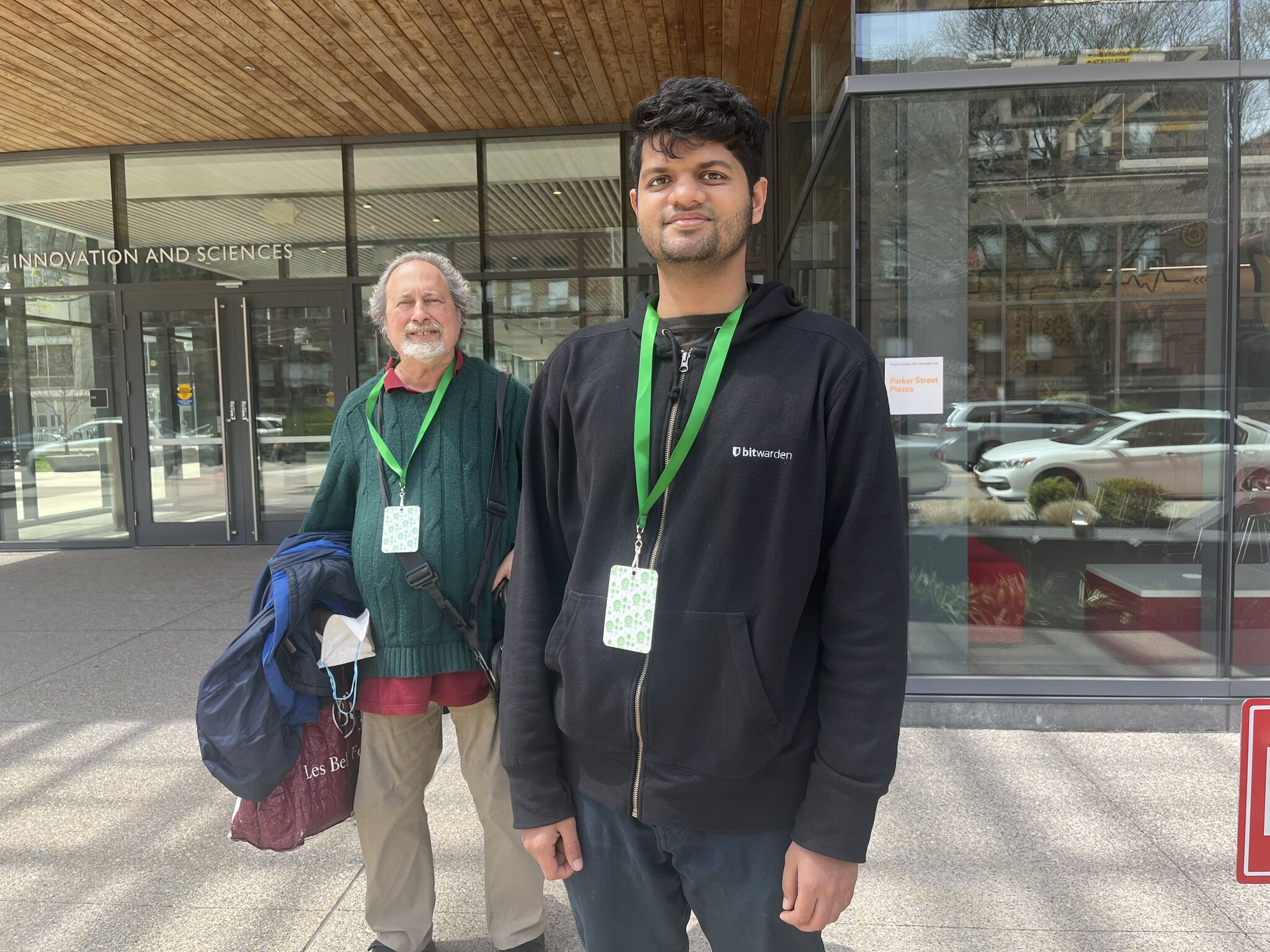
<p>A highlight of the conference was meeting Richard Stallman, the pioneer of the free software movement. Our conversation about the future of digital rights and the importance of maintaining free software principles in our rapidly evolving digital landscape was both enlightening and inspiring. It served as a powerful reminder of why we continue to advocate for software freedom.</p>
<p><img loading="lazy" src="/images/content/blog-opensource-libreplanet2024-2b0e72f3-4818-415f-b4a4-ee50cd3f830d.png" alt="Meeting with Richard Stallman at LibrePlanet 2024" />

<em>A memorable moment discussing digital rights with Richard Stallman at LibrePlanet 2024</em></p>
<h2 id="a-critical-moment-for-digital-freedom">A Critical Moment for Digital Freedom</h2>
<p>As we face unprecedented challenges to digital rights, LibrePlanet 2024 provided a crucial forum for resistance and innovation. Google&rsquo;s <a href="https://www.defectivebydesign.org/blog/web_environment_integrity_is_an_all_out_attack_on_free_internet">Web Environment Integrity</a> proposal threatens the open web, companies harvest data indiscriminately for AI training, and governments worldwide are drafting legislation that could restrict software freedom. These challenges make community building more essential than ever.</p>
<h2 id="keynote-insights">Keynote Insights</h2>
<h3 id="building-welcoming-communities">Building Welcoming Communities</h3>
<p><strong>David Wilson</strong> opened the conference by sharing insights from his work with System Crafters and GNU Emacs communities. He presented a human-centered approach to project management that streamlines contributions while creating a sense of shared ownership.</p>
<h3 id="bridging-technology-and-social-justice">Bridging Technology and Social Justice</h3>
<p><strong>Hayley Tsukayama</strong> from the Electronic Frontier Foundation delivered a powerful keynote about connecting tech advocacy with broader social movements. She highlighted EFF&rsquo;s collaborations with criminal justice, reproductive justice, and worker rights advocates, demonstrating how technology policy intersects with fundamental human rights.</p>
<h3 id="breaking-hardware-barriers">Breaking Hardware Barriers</h3>
<p><strong>Alyssa Rosenzweig</strong> closed the conference with an inspiring presentation on reverse-engineering Apple&rsquo;s GPU, showing how dedicated community efforts can overcome even the most challenging technical restrictions to ensure hardware freedom.</p>
<h2 id="workshops-and-hands-on-learning">Workshops and Hands-on Learning</h2>
<h3 id="community-building-in-practice">Community Building in Practice</h3>
<ul>
<li><strong>Christina Haralanova</strong> led an interactive workshop connecting community organizations with tech activists, sharing insights from interviews with 50 Canadian organizations about their technological challenges.</li>
<li>The <strong>GNU Taler</strong> workshop demonstrated how to implement privacy-respecting payment systems.</li>
<li><strong>Ilya Gulko&rsquo;s</strong> Pollyanna framework workshop showed participants how to build their own transparent social spaces.</li>
</ul>
<h2 id="technical-innovation-and-freedom">Technical Innovation and Freedom</h2>
<h3 id="ai-and-community-control">AI and Community Control</h3>
<p><strong>Kevin Korte&rsquo;s</strong> session &ldquo;AI in a Closing World&rdquo; addressed the critical need for free software alternatives in AI development, warning against centralized control of decision-making systems.</p>
<h3 id="hardware-freedom">Hardware Freedom</h3>
<ul>
<li>Detailed explorations of free GPU drivers.</li>
<li>Discussion of Raspberry Pi liberation progress by <strong>Johannes Åsgård</strong>.</li>
<li>Gaming on libre hardware by <strong>Tobias Platen</strong>.</li>
</ul>
<h3 id="security-and-privacy">Security and Privacy</h3>
<ul>
<li><strong>Adam Monsen&rsquo;s</strong> &ldquo;Steadfast Self-hosting&rdquo; provided practical solutions for digital independence.</li>
<li><strong>AccessKit&rsquo;s</strong> development promises to make free software more accessible to disabled users.</li>
</ul>
<h2 id="education-and-community-growth">Education and Community Growth</h2>
<h3 id="academic-initiatives">Academic Initiatives</h3>
<ul>
<li><strong>GNU@NU</strong> showcased how Northeastern University&rsquo;s free software organization introduces students to software freedom.</li>
<li><strong>Neil Plotnick</strong> shared experiences teaching GNU/Linux in high school classrooms.</li>
</ul>
<h3 id="creative-applications">Creative Applications</h3>
<ul>
<li><strong>Seth Patterson</strong> demonstrated writing free culture fantasy with free software.</li>
<li><strong>Marco Calegaro</strong> discussed creative uses of 3D printing with free software.</li>
</ul>
<h2 id="international-perspectives">International Perspectives</h2>
<h3 id="global-community-initiatives">Global Community Initiatives</h3>
<ul>
<li><strong>Paulo Henrique de Lima Santana</strong> presented on the vibrant Debian Brazil community.</li>
<li><strong>Wensheng XIE</strong> shared experiences coordinating GNU website translations.</li>
<li>Multiple sessions addressed the challenges of building global, inclusive communities.</li>
</ul>
<h2 id="policy-and-advocacy">Policy and Advocacy</h2>
<h3 id="legislative-progress">Legislative Progress</h3>
<p><strong>Ciarán O&rsquo;Riordan&rsquo;s</strong> analysis of the EU Cyber Resilience Act provided valuable insights into effective policy advocacy. Various sessions addressed:</p>
<ul>
<li>Free software in government.</li>
<li>Privacy regulations.</li>
<li>International coordination.</li>
</ul>
<h2 id="looking-forward">Looking Forward</h2>
<p>The FSF announced that 2025 will feature multiple events throughout the year instead of a single conference, marking their anniversary with expanded community engagement opportunities.</p>
<h2 id="community-impact-and-personal-reflections">Community Impact and Personal Reflections</h2>
<p>The hybrid format of LibrePlanet 2024 proved especially powerful, combining the irreplaceable energy of in-person connections with the accessibility of online participation. The hallway conversations, impromptu discussions, and community bonding that occurred between sessions were just as valuable as the formal presentations.</p>
<p>Connecting with fellow advocates, developers, and community members reminded me why the free software movement remains vital in today&rsquo;s digital landscape. From students exploring free software for the first time to veteran developers sharing decades of experience, the diversity of perspectives and shared commitment to software freedom created an atmosphere of genuine collaboration and mutual support.</p>
<h2 id="the-path-forward">The Path Forward</h2>
<p>The conference highlighted both the challenges and opportunities facing the free software movement. From grassroots education to technical innovation, from policy advocacy to creative applications, the community showed its commitment to building a future where software freedom enables human freedom.</p>
<h2 id="get-involved">Get Involved</h2>
<p>After experiencing the vibrant community at <a href="https://libreplanet.org/2024">LibrePlanet 2024</a>, I encourage everyone interested in digital rights and software freedom to get involved:</p>
<h3 id="immediate-actions">Immediate Actions</h3>
<ul>
<li>Watch conference recordings on <a href="https://media.libreplanet.org/">GNU MediaGoblin and PeerTube</a>.</li>
<li>Join the <a href="https://www.fsf.org/free-software-supporter">FSF&rsquo;s mailing lists</a>.</li>
<li>Connect with local free software groups.</li>
<li>Contribute to translation efforts.</li>
<li>Participate in educational initiatives.</li>
</ul>
<h3 id="project-connections">Project Connections</h3>
<ul>
<li>Educational outreach programs.</li>
<li>Local user groups.</li>
</ul>
<hr>
<p><em>Conference materials, including presentations and recordings, are made available under free culture licenses through GNU MediaGoblin and PeerTube platforms.</em></p>
]]></content>
      </entry>

</feed>